Contents: Assessing Ticket Condition | Examples | Research Implications
Assessing Ticket Condition
The tickets in this collection are not kept under any special care, so the physical wear is evident on every item, the extent of wear is what varies. In order to provide context, the tickets are all kept in a plastic zip lock bag in a storage box so that they do not become separated or lost. This does mean, however, that the friction of the tickets has caused the ink on many of them to fade. It is not immediately evident whether the friction and close contact of the tickets is what faded the ink or if the ink has faded due to time or radiation (usually from light exposure). Of course, ticket paper is commonly known to contain traces of acid in its make-up, which affects the ink and color of the ticket stub over time, so this must also be considered when assessing the condition of a ticket stub.
In order to combat wear, tear, and degradation of fragile ticket stubs, there are many steps that can be taken to store them safely. The first, and hopefully more obvious, step is store the items in a dry place. Moisture is very damaging to the ink. Keeping the items out of direct sunlight will also aid in their preservation. The paper and ink are fragile enough that sunlight will fade the tickets to the point of zero visibility after only a few years.
When it comes to storing paper items such as ticket stubs, scrapbook and card collection materials may often come in handy; particularly for movie tickets, since they are small enough to fit inside 2 5/8 x 3 3/4 polypropylene sleeves, which are typically designed for trading cards. Poly sleeves allow you to handle the items with minimal touching, which can help to maintian the ink and coloration of the ticket stub. Acid-free card boxes are likely the best for preserving tickets long term.
When keeping notes on a particular movie ticket, avoid writing directly on the ticket. Instead, use a piece of buffer paper and write using acid-free ink. There is an example below of a ticket stub with pencil notations written on the front. This will not hold up well over time, but it would likely be more damaging to try to erase the pencil marks, so at this point, it is best to leave it on there.
When assessing the conditions of the movie tickets in this collection, it is important to define what constitutes each condition. Unfortunately, the organization which is most authentic and trusted at determining the condition of tickets is the Professional Sports Authenticator (PSA), and they do not accept movie tickets. Their system of condition grading may be adapted, but only very loosely since ticket type greatly effects the ways in which it degrades. In the case of this collection, I have chosen to grade their condition according to my own system:
-Fine: Ticket is in mint condition with no scuffing, foxing, rips or tears, fading, or marks of any kind. All of the text is clearly visible. No dicoloration.
-Good: Ticket shows minimal signs of fading, folding, foxing, or marks. Most of the text is clearly visible and there is some discoloration.
-Fair: Ticket has clear creases from folding. Tears and rips are present, but text is still visible. Fading has affected some or most of the text, but it is still readable with effort. Discoloration has affected the majority or entirety of the ticket.
-Poor: Ticket is ripped or torn with text missing. Discoloration and fading makes the text unreadable in most places.
There are examples of ticket stub conditions within this collection included in the next section.
Examples
The following two ticket examples originate from the Regal UA Galaxy 14 theater in Indianapolis, IN, in the year 2015. This is a great example of how differently two tickets can fare over the same amount of time while kept under the same conditions.
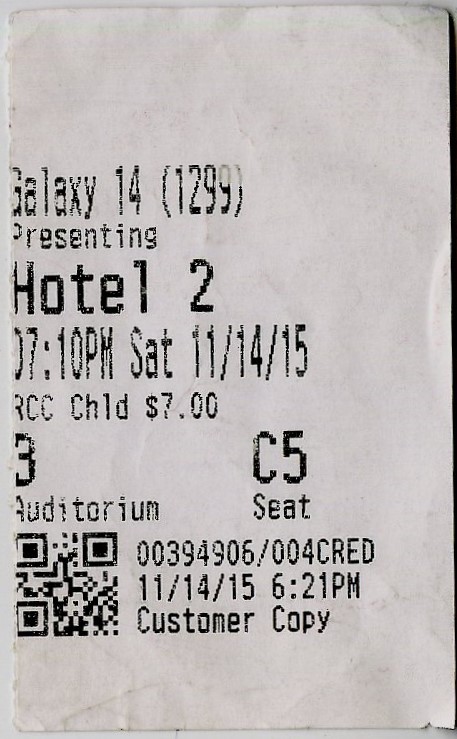
Good
There is very slight fading of the text and very minimal folding or creasing. No rips or tears, except for the bottom edge where the edge is no longer smooth.
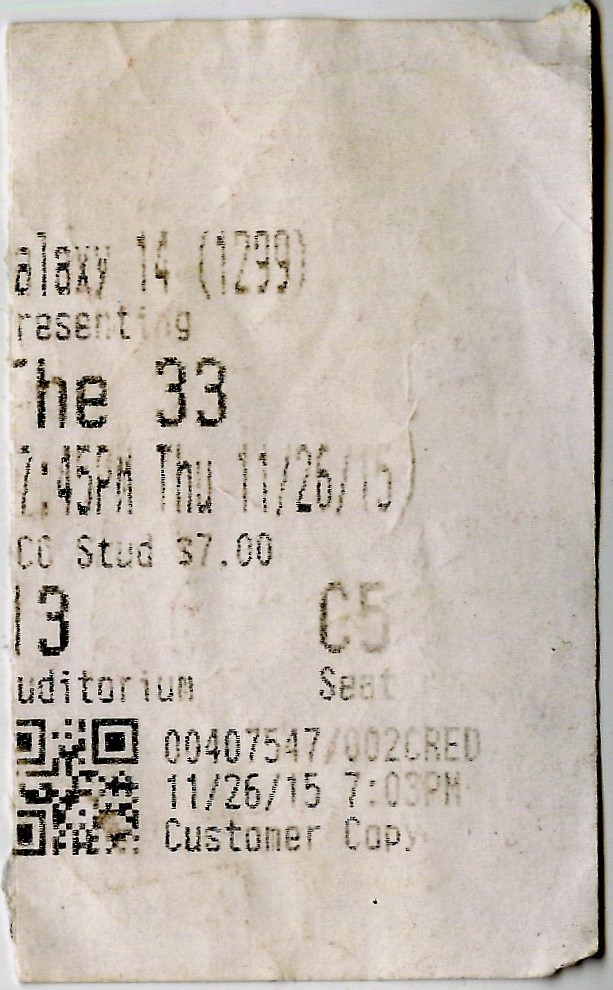
Fair
This ticket includes more severe fading with some letters and number nearly completely gone. There is also some foxing and discoloration, but it does not obscure any text. Slight creasing and rough edges, but no tears or rips.
Research Implications
Movie ticket collections are gaining traction as a popular way of documenting pop culture trends and nostalgic memories. Movie ticket stubs technically fall under the umbrella of epherema, which essentially means they are only useful for a short period of time and are not meant to last long-term. Similar to other types of popular ephemera items like post carsd, printed advertisements, and posters, movie ticket stubs are typcially kept for personal reasons, not for research purposes. This does not discount them, however, from holding historical value as time goes by. Historical value can be found in the economic implications of ticket price fluctuation over time and across various locations. Students of archival and preservation studies may find value in the paper quality of these tickets and the comparison aspect that is available in a collection like this. For instance, a scholar, economist, entrepreneur, or any other interested individuals, may compare the ticket paper quality between AMC theaters and Regal UA Galaxy theaters with the contextual information of time and place included on the item, which may provide a more holistic assessment. There may also be the potential for research on popular film genres during certain time frames. For instance, superhero movies made a distinct resurgence in popularity over the past ten years, or so, and movie tickets are a unique and effective way to track such a trend.